
The pro-life state of Louisiana wants to hold pro-abortion blue states accountable for enabling mail-order abortions that ship thousands of illegal abortion pills into its borders that kill babies.
Louisiana is moving to halt what Attorney General Liz Murrill calls an organized pipeline of mail-order chemical abortions from shield-law states, starting with planned federal lawsuits against New York and California after those states refused to extradite illegal abortionists charged with sending abortion pills into Louisiana.
Murrill says the fight is about whether New York, California and Massachusetts can use “shield” laws to protect people who mail abortion drugs into a state that has banned elective abortion and chosen to protect unborn children.
“Kathy Hochul and Gavin Newsom are not above the Constitution, and we will hold them accountable,” Murrill said. “The Supreme Court’s precedents on important Constitutional provisions like the Extradition Clause and the Full Faith and Credit Clause forbid this assault on Louisiana’s sovereignty and her citizens.”
Get the latest pro-life news and information on X (Twitter). Follow @LifeNewsHQ
Louisiana has sent formal extradition requests in two felony cases. Prosecutors charged New York abortionist Margaret Carpenter with mailing abortion drugs to West Baton Rouge Parish, where a teenage girl took the drugs and herbaby died and she nearly died as well. They charged California abortionist Remy Coeytaux with mailing abortion pills to a woman in St. Tammany Parish who took them and her baby was also killed.
Gov. Jeff Landry signed an extradition warrant for Carpenter. New York Gov. Kathy Hochul and California Gov. Gavin Newsom refused to turn the abortionists over, citing their states’ abortion shield laws. Massachusetts has a similar pro-abortion law that bars the governor from extraditing someone charged over abortion that is legal in Massachusetts.
Murrill said suing the governors is “the only way to address them protecting people who are openly committed to nullifying and violating our criminal laws in our state.”
“They don’t agree with the laws of our state, and so they have this whole system set up to nullify our laws,” she said. “I think that is an affront to the full faith and credit that our state is afforded under the United States Constitution.”
“This conduct is unethical — medically unethical — in addition to being illegal,” Murrill said. She compared mailing the pills into Louisiana to “sending someone a gun who isn’t allowed to have one under state law or deadly drugs like fentanyl that end up killing a child.”
Louisiana’s protective abortion ban took effect after the U.S. Supreme Court, in Dobbs v. Jackson Women’s Health Organization, returned the issue to the states. Murrill argues that ban has been undercut by a 2023 Food and Drug Administration policy that dropped the in-person dispensing requirement for mifepristone, allowing telehealth prescribing and delivery by mail.
“Out-of-state abortion drug peddlers are violating the criminal laws of Louisiana and other states across the country that choose life,” Murrill said. “They aren’t providing healthcare, they’re drug dealers.”
A brief from 21 states supporting Louisiana’s FDA case made the same point about New York and California physicians: “The 2023 [policy] effectively permits New York and California doctors to superimpose their views on States like Louisiana, whose citizenry and electorate have charted a different path.” The brief said a New York abortionist can “circumvent prolife States’ clear prohibitions on telehealth chemical abortions,” calling that “a direct affront to States’ ‘sovereign interest.’”
Filings in Louisiana’s case say mail-order abortion drugs sent from other states accounted for an average of 617 abortions a month in Louisiana from April to June 2024, about 800 in December 2024, and nearly 1,000 a month in 2025.
The state also sued the FDA with Louisiana resident Rosalie Markezich. Court papers say her then-boyfriend ordered mifepristone from Coeytaux, received it by mail and coerced her into taking it, killing her baby. Markezich has said she did not want the abortion. California refused to extradite Coeytaux.
“This is not healthcare; it’s drug dealing,” Murrill said when she announced that indictment, adding that women have arrived in emergency rooms after taking the pills and being coerced into abortions.
“We will continue to try and hold the people responsible, all of the people responsible who are facilitating the nullification of our laws,” she said.
The interstate fight is also before federal courts in Louisiana’s separate case against the FDA.
The state argues that the 2023 mailing rule makes it logistically difficult to enforce its pro-life laws and that Medicaid has incurred costs from injuries to women who obtained the drugs online. The 5th U.S. Circuit Court of Appeals granted Louisiana an expedited hearing and, in May, issued a stay that briefly halted telehealth abortions before the Supreme Court allowed mail-order access to continue while the case proceeds.
The 5th Circuit heard argument in September.
Other Republican-led states are pursuing related challenges.
Florida and Texas sued to revoke the FDA’s 2000 approval of mifepristone and later decisions that expanded mail access. On Aug. 30, U.S. Chief District Judge Reed O’Connor in Texas paused that case until at least Dec. 1, or until the FDA finishes a safety review, pushing any ruling past the midterm elections. Missouri, Idaho and Kansas have joined a separate effort to restore older in-person rules.
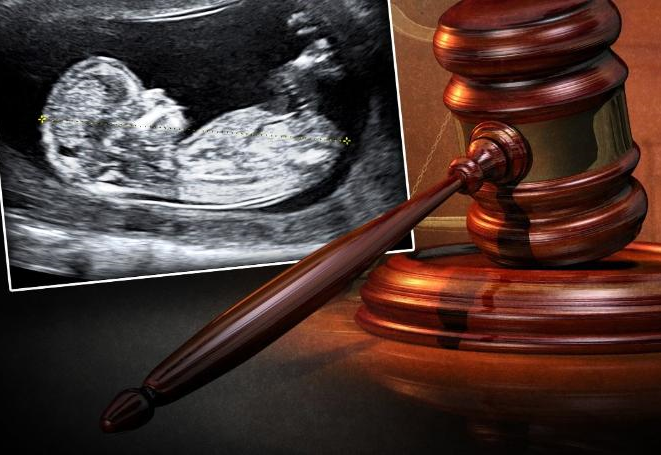
The post Louisiana Sues New York, California and Massachusetts for Enabling Mail-Order Abortions appeared first on LifeNews.com.